
The Lee County Inmate Population
Lee County holds people in two very different places. The Lee County Jail in Dixon is the local lockup run by the Lee County Sheriff's Office. It holds people who were just arrested, people a judge has ordered to stay in custody while a case moves, and people serving short county sentences. The jail is the part of the inmate population that the county itself reports. Dixon Correctional Center, also in the county, is a state prison and is counted by the Illinois Department of Corrections, not the sheriff.
Because of that split, the phrase Lee County inmate population can mean two things. It can mean the few dozen people in the county jail on a given day. It can also mean the roughly one thousand sentenced men held inside the state prison in Dixon. The county jail count rises and falls with arrests, bond and detention rulings, and transfers to prison. The state prison count is set by sentencing across all of Illinois, so it has little to do with local arrests.
Lee County Inmate Population Statistics
The most reliable jail figures come from the Illinois Department of Corrections jail inspection and the sheriff's own current list. The jail was built in 2020 and rated for 94 beds, split into 85 male beds and 9 female beds. On the inspection day in August 2024, the state counted 30 people inside. The sheriff's current list generated on June 9, 2026 showed 39 people housed. The county itself had about 32,914 residents in the 2025 Census estimate.
The table below pulls the sourced jail numbers into one place. Where the county does not publish a figure, the row says so plainly rather than guessing. Annual bookings and an average daily population series were not posted in the county or state sources reviewed, so they are not invented here.
| Measure | Figure | Source / Year |
|---|---|---|
| Rated bed capacity | 94 (85 male, 9 female) | IDOC jail inspection, Aug 13, 2024 |
| Inspection-day population | 30 (27 male, 3 female) | IDOC jail inspection, Aug 13, 2024 |
| Current list count | 39 housed | Lee County current inmate list, Jun 9, 2026 |
| County population | 32,914 | U.S. Census QuickFacts, 2025 estimate |
| Snapshot jail rate | about 119 per 100,000 | Calculated from 39 housed and 2025 Census |
| Annual bookings | Not published | Checked county and IDOC sources |
Lee County Jail Population Snapshots and Trends
Lee County does not publish a running average, so a true trend line is not possible from the public record. What does exist is a set of dated snapshots. Two come from state jail inspections and one from the sheriff's current list. Read together, they show a small jail that has stayed well under its 94-bed capacity in every reading on record. They are single-day counts, not yearly averages, so they are labeled that way below.
| Date | People Held | Notes |
|---|---|---|
| Aug 8, 2023 | 42 | IDOC inspection day; 40 male, 2 female |
| Aug 13, 2024 | 30 | IDOC inspection day; 27 male, 3 female |
| Jun 9, 2026 | 39 | Sheriff current list; static snapshot, not an average |
The gap between 42 and 30 looks like a drop, yet both are just the count on one morning. A jail this size can swing by a handful of people in a single weekend. The honest read is that the Lee County jail population sits at roughly a third to a half of capacity in the readings we have.
Who Is Counted in the Lee County Inmate Population
The county jail list does not break people down by age, race, or charge level. The only public breakdown is the male and female split from the state inspections. That keeps the demographic picture thin, so the points below stick to what the sources actually report.
- Pre-trial vs sentenced - The jail mixes people awaiting court with people serving short county terms; the county does not publish the split.
- Male vs female - The 2024 inspection counted 27 men and 3 women; the 2023 inspection counted 40 men and 2 women.
- Juveniles - Both recent inspections recorded no juveniles held at the jail.
- Held for other agencies - The 2024 inspection noted the jail was not housing detainees for outside jurisdictions on the inspection day.
For county context, the Census reports the population as about 90.8% White, 5.8% Black, and 8.4% Hispanic or Latino. Those are county-wide figures and not a jail breakdown, since the jail does not report one.
Lee County Jail Capacity and Crowding
Crowding is not the story here. The jail is rated for 94 beds and every snapshot on record sits far below that line. The August 2024 inspection found 30 people, which is under a third of capacity. The June 2026 list showed 39, which is still less than half. No overcrowding order, consent decree, or capacity lawsuit turned up in the official record.
The 2024 inspection did flag two paperwork problems rather than crowding. Reviewers found gaps in the records for required annual training and gaps in the logs for the 30-minute checks on people in custody. Those checks appeared to be done about 93% of the time. The state asked the county to add staffing or other steps and to keep better records. These are conditions notes, not signs that the jail is over its limit.
Laws Behind the Lee County Inmate Population
Several Illinois laws make jail data public and set the rules the county jail must follow. The Freedom of Information Act opens most jail and arrest records to the public. A separate arrest-report rule sets a deadline for releasing basic booking facts. County jail standards and a state inspection unit govern how the jail runs and how its population is counted. A death-in-custody law forces facilities to report deaths to a state body. Each is summarized in plain English below.
Key Statutes:
Illinois Code § 5 ILCS 140 - The Freedom of Information Act makes most jail, booking, and inmate records open for inspection or copying unless a listed exemption applies.
Illinois Code § 5 ILCS 140/2.15 - Police and jails must hand over basic arrest-report facts, including a photo when one exists, no later than 72 hours after an arrest.
Illinois Code § 730 ILCS 125 - The County Jail Act puts the sheriff in charge of the jail and the people committed to it.
Illinois Admin. Code Part 701 - County jail standards set the rules for records, admission and release, classification, medical care, and the monthly population counts.
Illinois Code § 730 ILCS 210 - The Reporting of Deaths in Custody Act requires a jail to report a death in custody to a state agency within 30 days.
The state inspection unit ties these together. The IDOC Jail and Detention Standards Unit inspects county jails each year and collects population counts monthly, which is why the inspection reports are the best official source for Lee County jail numbers.
Lee County and the Illinois Prison Population
When a Lee County defendant is convicted and sentenced to prison, that person leaves the county jail and joins the state count. Dixon Correctional Center sits inside the county and is one of the larger medium-security prisons in Illinois. Its population dwarfs the local jail. The state facility page listed 991 people on June 30, 2024, and the agency annual report listed 1,034 on June 30, 2025 with an average daily population near 998.
The lead-in to that state count is the IDOC facility record for Dixon, which sets out its capacity, security level, and programs. The Dixon Correctional Center facility page shows the state context for the prison in plain terms.
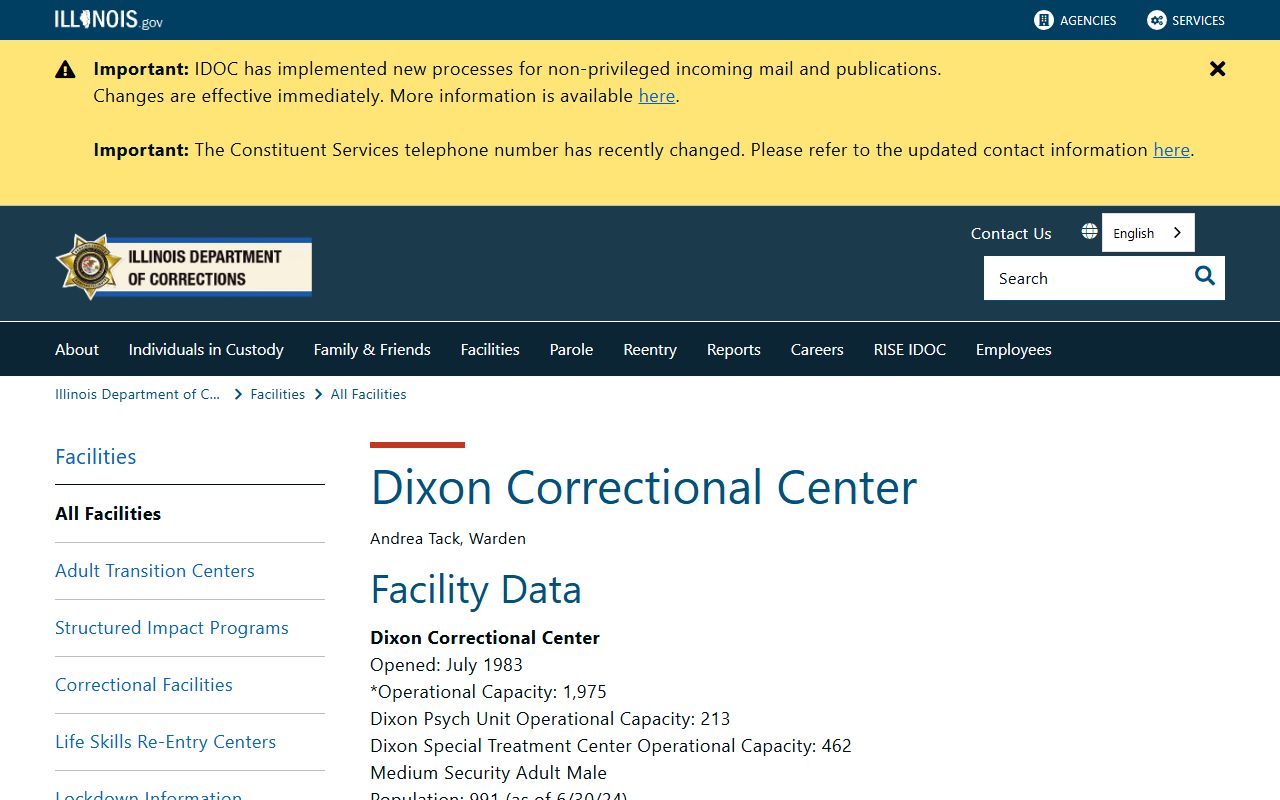
That same page is the place to confirm the prison is state custody and not part of the county jail roster, which keeps the two parts of the Lee County inmate population from being mixed up. The Dixon Correctional Center facility page goes deeper into its capacity and lookups.
How to Search the Lee County Inmate Population
There is no clickable roster with profiles in Lee County. The official county tool is a simple list. The sheriff posts a current inmate list as a PDF from the Lee County Jail page, and that list carries only names and booking numbers. To search it, you open the file and use your browser or reader to find a last name.
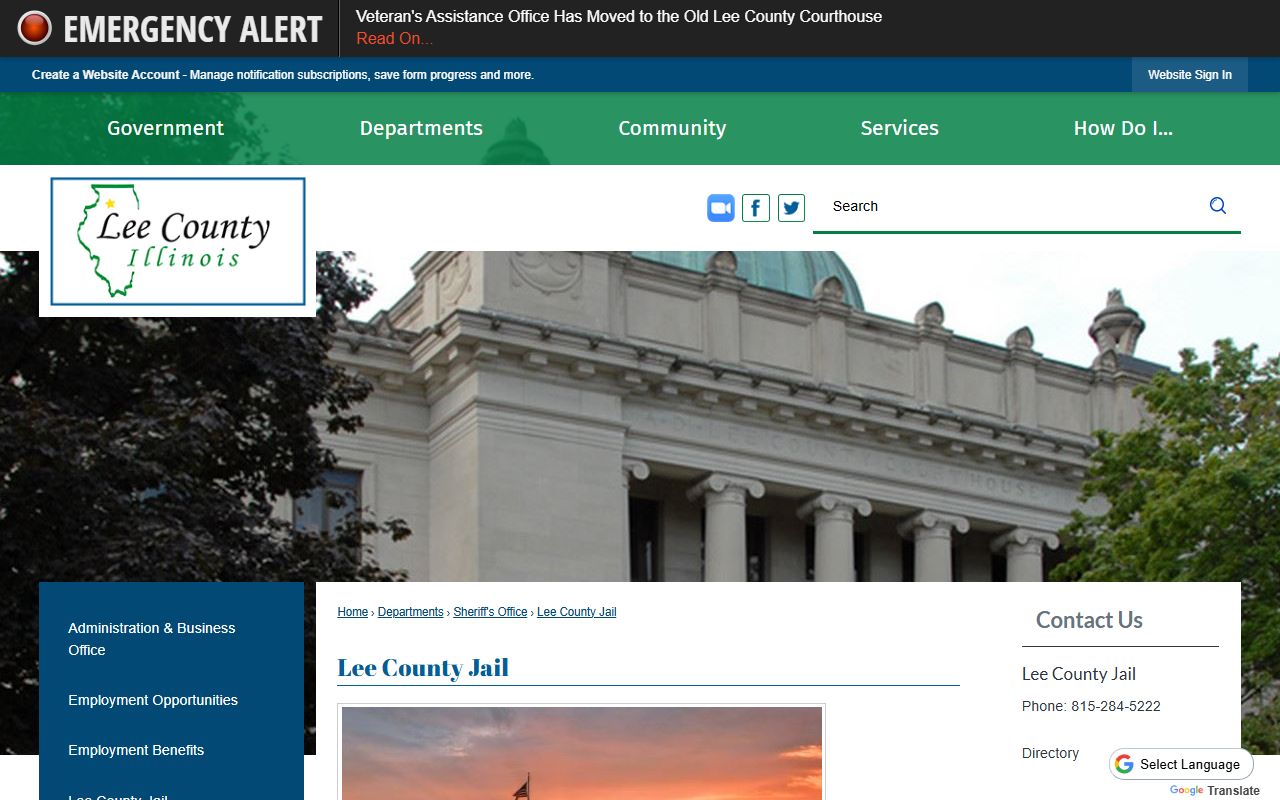
The jail page above is also where you reach the recent arrest summary, visitation tools, and the bond notice. Before you start, have the full name ready, and a booking number if you have one, since the list gives nothing else to tell two people apart.
- Open the Lee County Jail page and find the link for the current jail list.
- Open the PDF and note the date it was generated at the top.
- Use the find tool in your browser or reader to search the last name.
- Match the name and booking number; the list shows nothing more.
- If the person is not listed or was sentenced, check the state IDOC locator instead.
Current Inmate Lookup in Lee County
The current list answers one narrow question: was this person housed at the jail when the file was made. It is a snapshot, not a live feed, so it does not show people booked and released between reports. The list has no search box of its own because it is a static PDF, which is why the field table below describes what is on the page rather than a form to fill in.
| Field Label | Type | Required | Notes |
|---|---|---|---|
| Name | PDF text column | n/a | Listed by last name, then first and middle where shown. |
| Booking # | PDF text column | n/a | Format such as 25LJ-0832 or 26LJ-0180. |
| Total Housed | Summary line | n/a | The Jun 9, 2026 file listed 39 housed. |
| Report date | Header line | n/a | Tells you how fresh the snapshot is. |
For anything beyond a name match, the next stop is the sheriff's recent arrest summary or a phone call to the jail. The jail line is the fastest way to confirm whether someone is still in custody.
Note: The current list shows only people housed when the file was generated, so a booking and release between reports may never appear on it.
Past and Released Lee County Inmate Records
Released inmates drop off the current list right away, since the list is only the people housed at the moment it is made. To find a past inmate, the better tools are the sheriff's recent arrest summary for new bookings and the county court portal for the case that followed. The arrest summary shows booking details such as arrest date, charges, and bond fields, even when the person is no longer held.
For older records, a public-records request is the formal route. Under the state Freedom of Information Act, you can ask the likely custodian, usually the sheriff or jail for booking records, for a copy. Be specific with a name, a booking number if you have it, and the date. A sentenced person leaves the county picture entirely and shows up in the state prison locator instead.
What a Lee County Inmate Record Shows
People expect a roster profile with a photo, charges, and bond. The Lee County current list does not offer that. It shows a name and a booking number, full stop. The table below sets out what the public list does and does not carry so there is no surprise when the page loads.
| Field | What It Shows |
|---|---|
| Name | Shown, in last, first, middle order. |
| Booking Number | Shown, a local jail identifier for the booking. |
| Mugshot | Not shown on the current list. |
| Charges | Not shown; check the arrest summary or court record. |
| Bond | Not shown on the current list. |
| Court Date | Not shown; the jail does not give out court dates. |
For a fuller picture, the Lee County jail inmate records page walks through how to combine the current list, the arrest summary, and the court portal.
Lee County Jail vs. Illinois State Prison
The most common mistake is searching the wrong system. The county jail covers people held before trial and people serving short county terms. The state prison covers people who were sentenced to felony time. Each has its own lookup, and a person who moves from jail to prison disappears from one and appears in the other. The table below sorts out which system to use.
| County Jail | State Prison (IDOC) | |
|---|---|---|
| Who Is Held | Pre-trial and short sentences | Sentenced felons |
| Run By | Lee County Sheriff | Illinois Department of Corrections (IDOC) |
| Where to Look | Sheriff current jail list | IDOC inmate locator |
| Stays Listed | Only while housed at the jail | Through the sentence, with parole and discharge fields |
State and Federal Inmate Search
When the county jail list comes up empty, the custody level may have changed. A sentenced person is found through the state locator, a federal defendant through the Bureau of Prisons, and an immigration detainee through ICE. The IDOC Individual in Custody Search covers state prisoners and lets you search by last name, IDOC number, or birthdate.
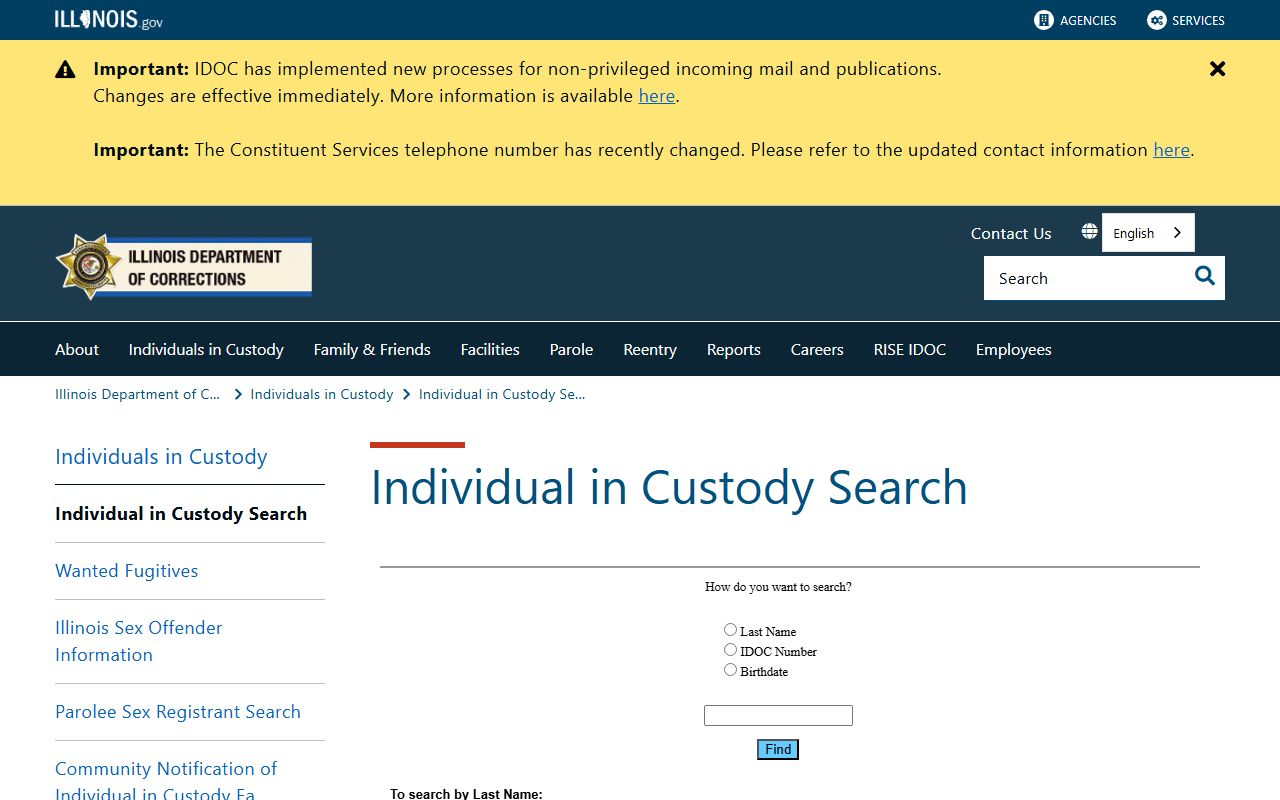
The state search shown above is the right tool once a Lee County defendant is sentenced and moved to prison. For federal custody, the Federal Bureau of Prisons locator covers federal inmates from 1982 forward, and the ICE Online Detainee Locator System covers immigration custody by A-number or biographical details. Remember that not found does not always mean not in custody.
Lee County Detention Facilities
Two facilities make up the custody map in Lee County, and they sit at the two ends of the system. One is the local jail run by the sheriff. The other is a large state prison run by Illinois. Each has its own facility page with addresses, lookups, and visitation.
- Lee County Jail - The sheriff's local jail in Dixon for people held before trial and serving short county terms.
- Dixon Correctional Center - A state prison in Dixon for sentenced men in Illinois custody, with a large psychiatric and special-treatment role.
Lee County Inmate Population FAQ
How big is the Lee County jail population?
The jail is rated for 94 beds. Every recent public reading sits well below that. The state counted 30 people on its August 2024 inspection day, and the sheriff's list showed 39 housed on June 9, 2026. The county does not publish a yearly average, so these are single-day snapshots rather than a long-term figure.
How do I search the Lee County inmate population?
Start with the sheriff's current jail list, a PDF linked from the Lee County Jail page that carries names and booking numbers. Use your reader to find a last name. If the person is not there or was sentenced to prison, switch to the state IDOC locator. For federal or immigration custody, use the BOP or ICE locators.
Does Lee County have a searchable roster with mugshots?
No. The county does not run a clickable roster, and its public list does not show booking photos. The list gives names and booking numbers only. Booking-photo questions are covered on the jail roster mugshots page, which explains what is and is not online.
Why is there a large prison in the same county?
Dixon Correctional Center is a state prison that happens to sit in Lee County. It is run by the Illinois Department of Corrections, not the sheriff, and holds sentenced men from across the state. Its population near one thousand is separate from the small county jail count and should not be mixed into it.